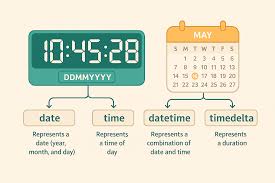
Date, Time, and Timezones — The Necessary Evil
Computers are fast, deterministic, and precise… until you ask them what time it is. Then everything falls apart. Why Timezones Exist (Short Version) Before standardized […]
Continue reading »Golden nuggets where no entry is longer than my expected attention span
Computers are fast, deterministic, and precise… until you ask them what time it is. Then everything falls apart. Why Timezones Exist (Short Version) Before standardized […]
Continue reading »
There was a time when build systems had the decency to be understood by humans. You opened a Makefile. You read it. You nodded. You […]
Continue reading »
When Interactive Brokers started moving IBAPI toward Protocol Buffers in the 10.35+ line, many developers had the same reaction: “Oh no. Do I have to […]
Continue reading »
If you’ve worked with Interactive Brokers’ API (IBAPI) long enough, you’ve felt it: this is not a product that was “designed once.” It’s a system […]
Continue reading »
These measured times varies a little, but should be a fair estimate of a normal situation.
Continue reading »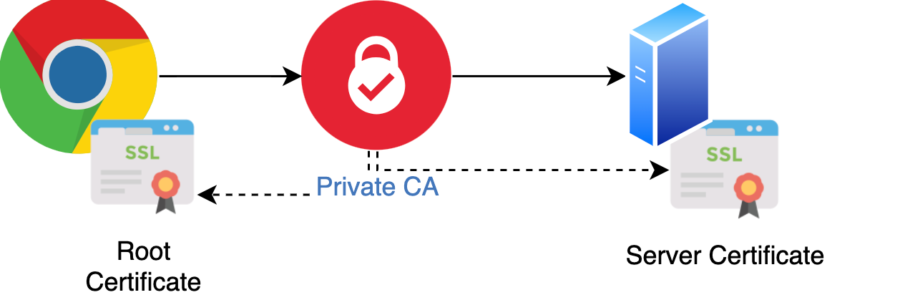
Den här guiden visar hur du: Detta är en korrekt intern PKI-setup för labb, hemnät eller isolerade miljöer. 🏗 Steg 1 – Skapa en intern […]
Continue reading »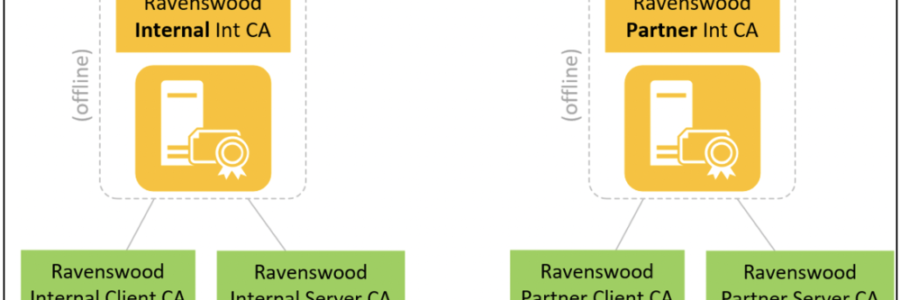
Du har skapat en egen Root CA (t.ex. inference-root-ca.crt) som du installerat på din webserver, och använder interna domäner som: frd.inf.localtrading.inf.local För att slippa cert-varningar […]
Continue reading »
Version 1 of this prompt focused on getting authentication, security, UI structure, database discipline, and deployment right. Version 2 goes one step further. Modern web […]
Continue reading »
Large Language Models are great at generating code — but without a strong, opinionated prompt, you often end up with demo apps that fall apart […]
Continue reading »
History, philosophy, design — and why it won Linux users eventually encounter systemd — often with strong opinions attached. Some praise it as essential infrastructure; […]
Continue reading »
This guide focuses on the commands you will actually use, starting simple and gradually adding power — without edge cases or weird tricks. You don’t […]
Continue reading »
Docker lets you run applications in isolated containers, making setup, deployment, and testing much easier. This guide shows the recommended, official way to install Docker […]
Continue reading »
Fast, fluent, feedback‑driven Python development for experienced developers. What is “Vibe Coding”? Vibe coding is a workflow where you stay in flow: VS Code is […]
Continue reading »
Python is preinstalled on most Linux systems — but you should not use the system Python for development.Doing so often leads to broken system tools, […]
Continue reading »
Large Language Models are no longer cloud-only.Today, several open or open-weight models can be run entirely on your own machine, giving you privacy, control, and […]
Continue reading »
1. Information Technology (IT) Går bra när: Går dåligt när: 2. Healthcare Går bra när: Går dåligt när: 3. Financials (banker, försäkring, kapitalförvaltare) Går bra […]
Continue reading »
If you’ve ever built open-source software the classic UNIX way — — you’ve touched a system that has existed (and survived!) for more than 30 […]
Continue reading »
(and Why We Still Can’t Escape Them)** If you’ve ever typed make and watched your terminal explode into life, you’re using one of the oldest […]
Continue reading »
Why Fridays and Expiration Days Behave Differently in Modern Markets Certain days of the trading week and certain calendar events create consistent, repeatable market behavior. […]
Continue reading »
The Monday Effect, Month-End Flows, and FOMC Drift — Why These Seasonal Patterns Still Matter in Trading Three classic market anomalies that remain relevant in […]
Continue reading »
Goal:Keep losses small, stay emotionally stable, and let your edge compound.Sizing > prediction. 1. Fixed % Risk per Trade (Fixed Fractional) Idea: Risk a fixed […]
Continue reading »
The most important skill in trading isn’t prediction — it’s sizing. Most people believe trading success comes from making good predictions.Professionals know the truth: The […]
Continue reading »
Financial NLP has evolved from simple sentiment classifiers to full-stack domain-specialized LLMs. Three names dominate most discussions today: FinBERT, FinGPT, and FinLLM.They solve related problems, […]
Continue reading »
Why certain scheduled events create predictable market behaviour — and how traders can systematically exploit the flow. Most edges in trading have weakened over the […]
Continue reading »
A practical, repeatable routine for consistent trading performance. Great traders don’t rely on motivation, intuition, or luck.They rely on process. A structured checklist removes emotion, […]
Continue reading »
The final part of the “Real Trading Wisdom” series. Most traders don’t fail because their ideas are bad.They fail because they unknowingly destroy their own […]
Continue reading »
What still works in a modern, high-efficiency, AI-driven market. Most trading “wisdom” is psychology or folklore. But a smaller set of principles consistently generates real […]
Continue reading »
Common sayings, market folklore, and the “everyone knows this” principles behind real trading. (or what you always wanted to known about trading secrets but were […]
Continue reading »If you’ve ever tried to buy SPY, VOO, or QQQ from a European broker, you’ve probably run into a frustrating wall of regulation.The ETFs are […]
Continue reading »The difference between a regular trailing stop order and an adjustable trailing stop order, also known as the “Adjustable Stop” order type in Interactive Brokers’ […]
Continue reading »
When I set out to build an executable for my backtesting application using PyInstaller, I ran into a series of errors that taught me a […]
Continue reading »
Intro Deploying Python applications can be done in several ways, each with trade-offs. Here, we compare three common approaches: 1. Deploying Source Code or Using […]
Continue reading »
In the world of trading and analysis, TWS scanner codes are invaluable tools for identifying stocks and options that meet specific criteria. Here’s a breakdown […]
Continue reading »
Exchange-Traded Funds (ETFs) remain a cornerstone of modern investing, offering flexibility, diversification, and liquidity to traders and investors alike. As we analyze the most traded […]
Continue reading »
If you’ve ever participated in AdventOfCode, you’ll know it’s a thrilling yet challenging journey of solving programming puzzles. While your language of choice matters, the […]
Continue reading »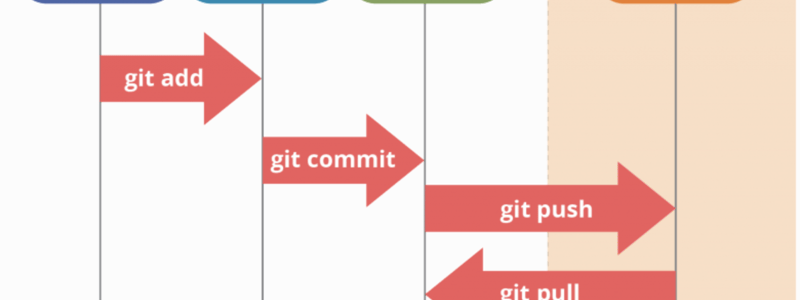
Managing code in a collaborative environment can be challenging, especially when multiple team members contribute to the same project. In this post, we’ll explore three […]
Continue reading »
When working with the Interactive Brokers (IB) API, one of the most essential components for effective order tracking is understanding the role of client ID […]
Continue reading »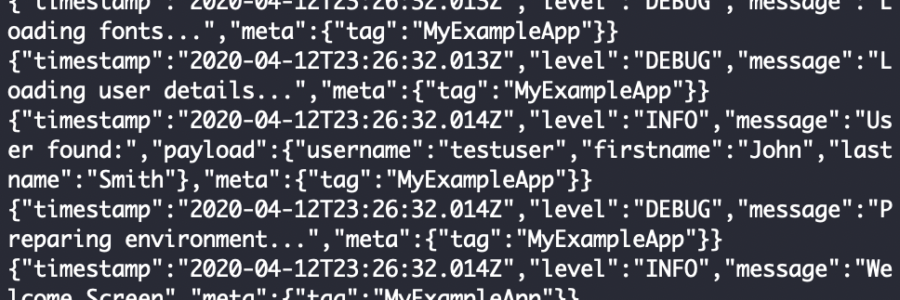
Logging is an essential part of any robust Python application. It provides insights into how your program runs, tracks errors, and helps with debugging. In […]
Continue reading »
When setting up a mail server on Linux, Postfix is one of the most popular choices for a mail transfer agent (MTA). Whether you’re sending […]
Continue reading »SSH sessions timing out due to inactivity can be frustrating, especially when you’re running long processes or working intermittently. Fortunately, you can configure both the […]
Continue reading »If you’re a developer working in Linux Mint, chances are you use Visual Studio Code (VS Code) as your go-to editor. It’s powerful, lightweight, and […]
Continue reading »
Handling missing data in a time series is a common challenge when working with datasets, especially in domains like finance or IoT, where data might […]
Continue reading »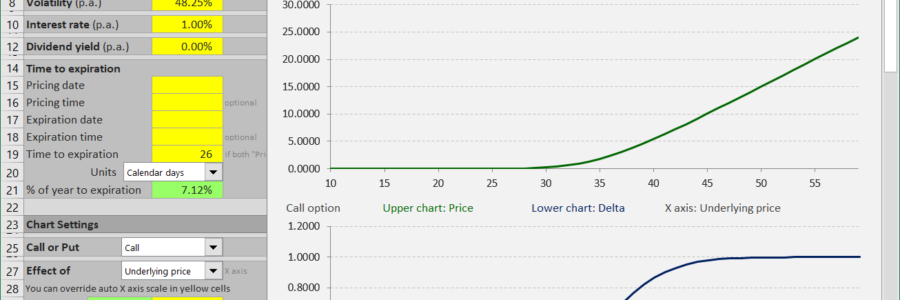
Creating reusable Python packages can greatly enhance your productivity and code management. In this blog post, we’ll walk through building a reusable package for a […]
Continue reading »
Introduction The global financial markets are supported by a vast network of stock exchanges, each with its unique history, regulatory environment, and technological advancements. There […]
Continue reading »
Posted on June 17, 2024, by Peter Andersson Introduction Managing the client and order ID in a straightforward environment with a single IBAPI application and […]
Continue reading »
My new hardcore PC har 24 cores. Twentyfour! Most of them sits idle when I run my code. It’s a bloody waste! Also, it is […]
Continue reading »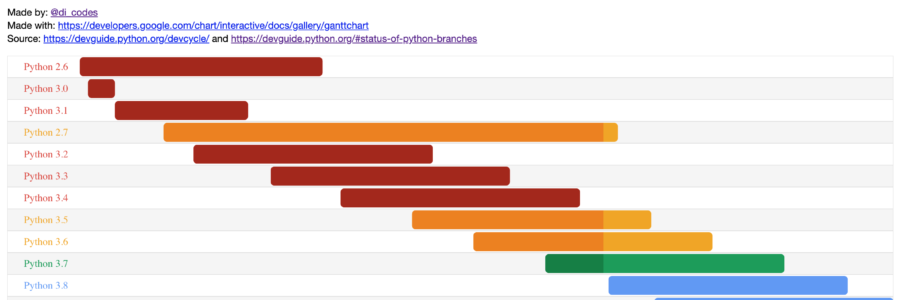
Overview of major enhancements in each version Python 3.6 (released December 2016) Formatted string literals (f-strings): name = “World” print(f”Hello, {name}!”) Underscores in Numeric Literals: […]
Continue reading »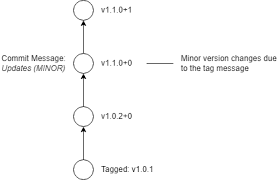
Versioning your software is crucial for tracking changes, debugging, and ensuring compatibility. When working with Python projects in Git, one popular tool to help automate […]
Continue reading »
Artificial intelligence (AI) has been transforming our world at an unprecedented pace. One of the most promising advancements in this field is ChatGPT by OpenAI. […]
Continue reading »
What you need to know There are several benefits of using SSH (Secure Shell) for remote access and file transfer: Overall, SSH is a powerful […]
Continue reading »
Trading in financial markets can be a complex and challenging endeavor. Traders need to analyze various data points to make informed decisions about when to […]
Continue reading »
Machine learning is a field of artificial intelligence that enables machines to learn from data and make predictions or decisions based on that learning. This […]
Continue reading »
Monte Carlo simulations are a powerful tool used to model a wide range of phenomena in finance, engineering, physics, and other fields. They are based […]
Continue reading »
DALL-E, short for “Dali + WALL-E,” is a new generative model created by OpenAI that combines the power of two existing technologies: GPT-3 and computer […]
Continue reading »