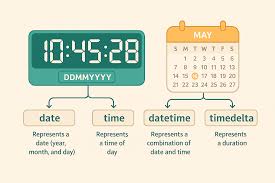
Date, Time, and Timezones — The Necessary Evil
Computers are fast, deterministic, and precise… until you ask them what time it is.
Then everything falls apart.
Why Timezones Exist (Short Version)
Before standardized time, every city used its own solar time. Noon was literally when the sun was highest.
Then railways showed up. Suddenly:
- Trains crashed
- Schedules made no sense
- People got annoyed
So in 1884, the world agreed on time zones, centered around Greenwich (UTC). Problem solved.
Except it wasn’t.
The Real Problem
There are two kinds of datetime values:
1. Naive datetime
- No timezone info
- “2026-04-24 12:00:00”
- Means: “somewhere, somehow, maybe”
2. Timezone-aware datetime
- Has explicit timezone
- “2026-04-24 12:00:00+02:00”
- Means: exact moment in time
This distinction is everything.
Python: The Good, The Bad, The Ugly
Naive (bad default)
from datetime import datetime
dt = datetime.now()
print(dt)  # 2026-04-24 12:00:00 (no timezone)
Looks fine. Is useless.
Aware (correct)
from datetime import datetime, timezone
dt = datetime.now(timezone.utc)
print(dt)  # 2026-04-24 10:00:00+00:00
Now you have an actual point in time.
Converting timezones
from datetime import datetime
from zoneinfo import ZoneInfodt = datetime.now(ZoneInfo("Europe/Stockholm"))
print(dt)
The Classic Bug
dt1 = datetime.now()
dt2 = datetime.now(timezone.utc)
print(dt1 == dt2)  # ❌ TypeError
Python refuses to compare naive vs aware.
This is not annoying. This is Python saving your life.
Daylight Saving Time (aka “Chaos Mode”)
Example:
- 2026-03-29 02:30 in Stockholm
- This time does not exist
Clocks jump from 02:00 → 03:00.
Also:
- Some times happen twice in autumn
Conclusion:
- You cannot trust local time
- Ever
Best Practice (One Rule)
Always store in UTC. Convert at the edges.
# store
dt = datetime.now(timezone.utc)# display
dt_local = dt.astimezone(ZoneInfo("Europe/Stockholm"))
C++ (brief reality check)
Classic C++ (<ctime>):
- timezone handling: weak
- DST: painful
- mostly naive
Modern C++ (<chrono> + C++20):
- supports time zones
- still verbose
Example (C++20):
#include <chrono>
#include <iostream>auto now = std::chrono::system_clock::now();
To handle time zones properly, you need:
std::chrono::zoned_time- a timezone database installed
Translation: it works, but Python is easier.
Practical Differences (Summary)
| Feature | Naive | Aware |
|---|---|---|
| Has timezone | ❌ | ✅ |
| Comparable globally | ❌ | ✅ |
| Safe for storage | ❌ | ✅ (if UTC) |
| Causes bugs | ✅ | Less |
Final Take
- Naive datetime: looks simple, causes pain
- Aware datetime: slightly annoying, actually correct
If you remember one thing:
Time without timezone is a bug waiting to happen.
And if something breaks in production at 02:30…
…it’s probably DST.